Some facades try to block heat, others reflect it. This one stores it. At the Bucky Lab at TU Delft, a student team set out to rethink a familiar weakness of modern architecture: the thermal performance of glass facades. While curtain walls are visually light and transparent, they often struggle to maintain stable indoor conditions. The result is overheating, fluctuating temperatures, and a growing dependence on mechanical cooling. Instead of adding another technical layer, the students introduced a quieter, almost invisible strategy – working with time.
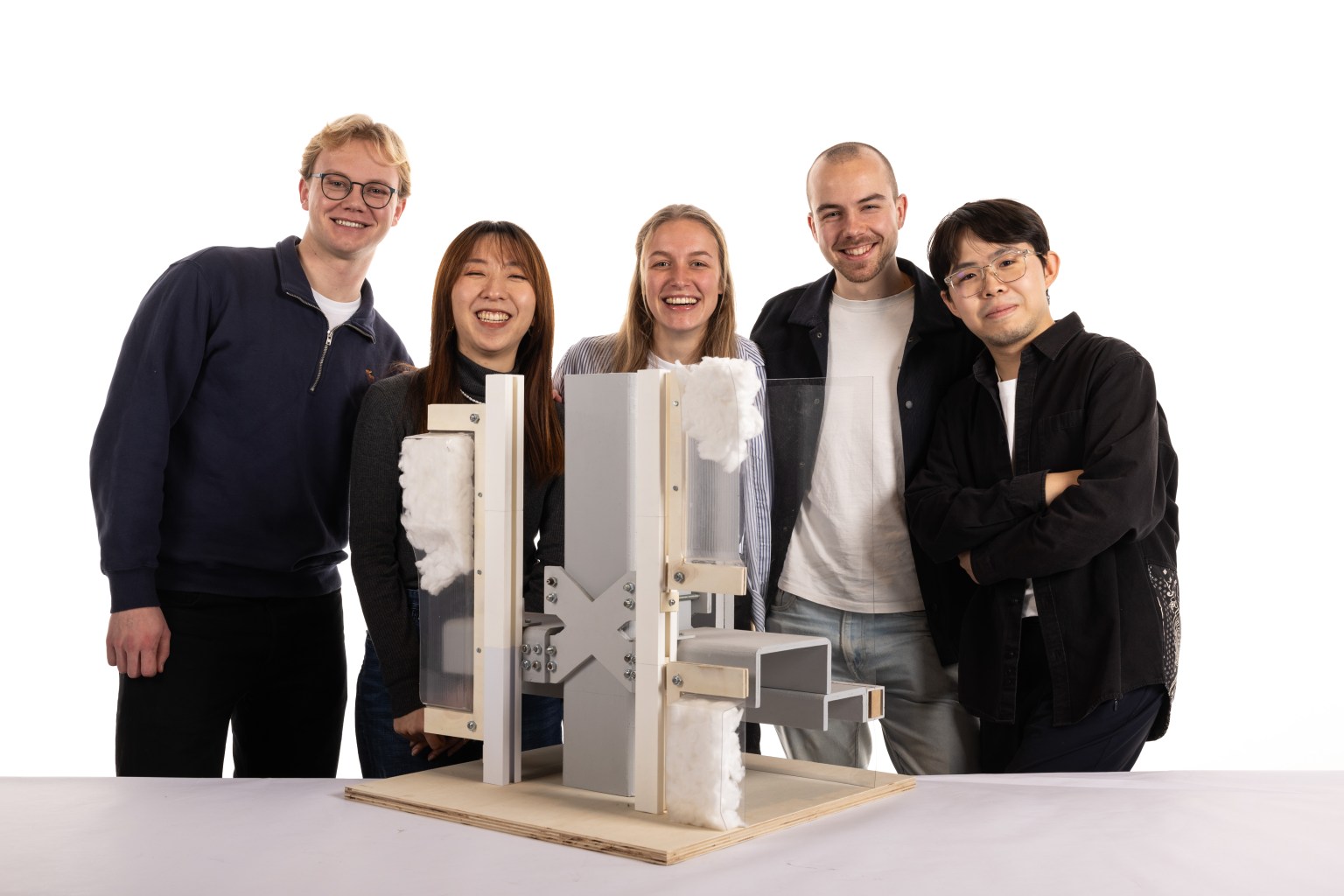
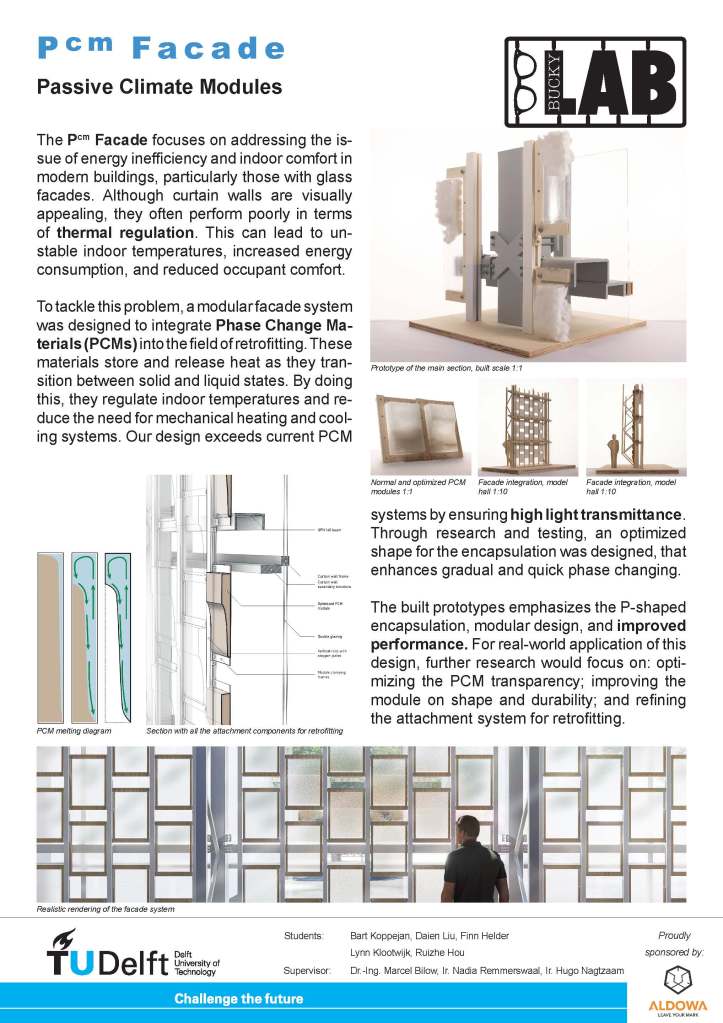
Their proposal is a modular facade system integrating Phase Change Materials (PCMs), substances that absorb heat as they melt and release it again as they solidify. In doing so, the facade becomes more than a separator between inside and outside; it starts to act as a thermal buffer. Heat peaks are softened, indoor temperatures become more stable, and the reliance on active systems can be reduced. It is a simple principle, but one that shifts the role of the facade from passive boundary to active mediator.
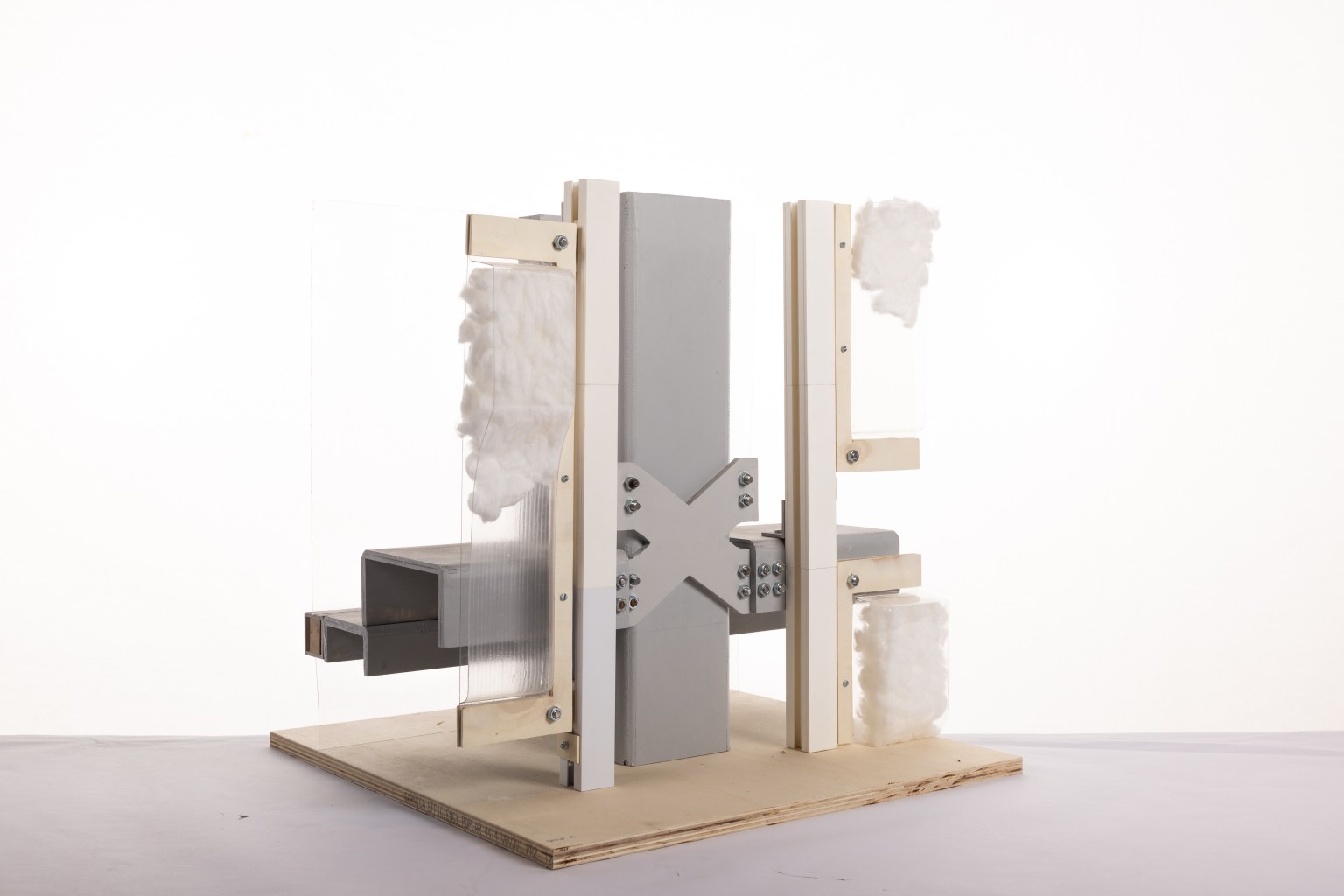
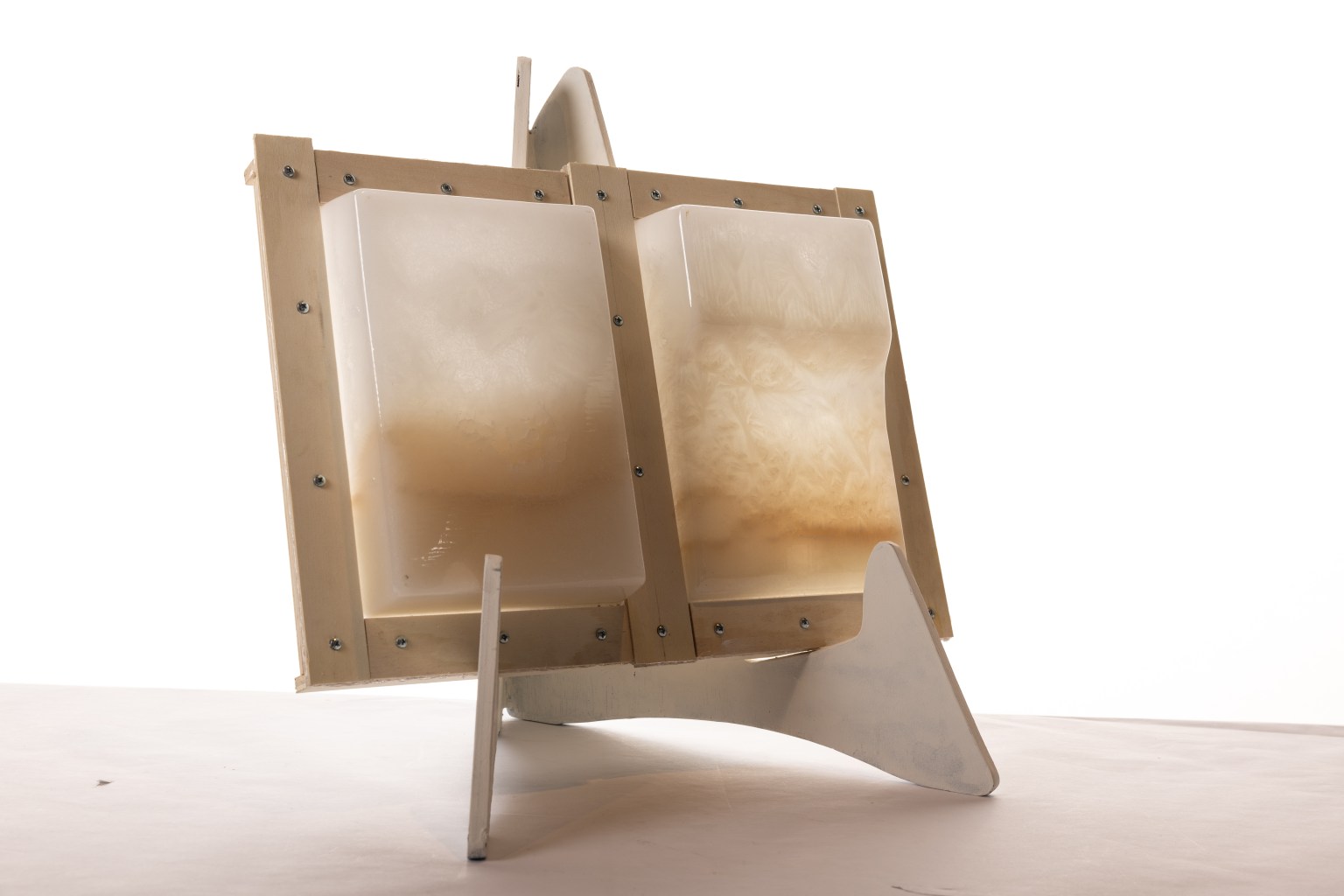
What makes the project particularly convincing is the attention to detail in the material and its geometry. Not all PCM applications perform equally well, and the team explored this through iterative testing and prototyping. The result is a carefully developed P-shaped encapsulation, a subtle geometric adjustment that significantly improves heat exchange. By increasing the surface area and guiding the flow of energy through the material, the system enables both gradual and rapid phase transitions. At the same time, the modules are designed to maintain a high level of light transmittance, preserving the visual qualities of a glass facade while enhancing its performance.
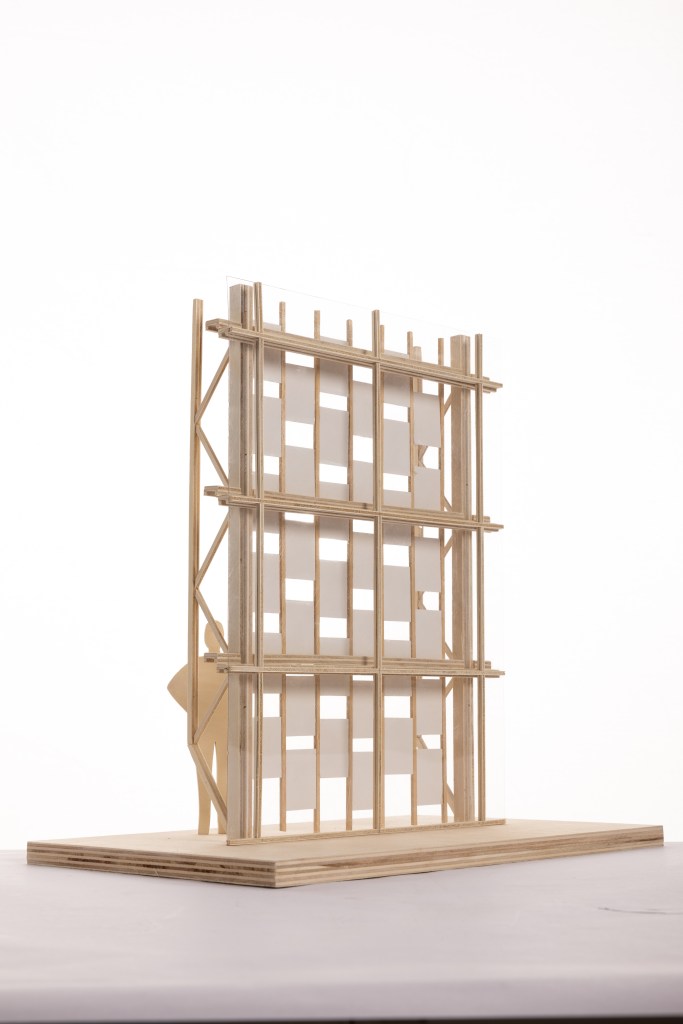
As with all Bucky Lab projects, the idea was tested through making. The team developed full-scale fragments and detailed models to study how the modules behave, how they can be integrated into existing facade grids, and how they might be attached in retrofit scenarios. This hands-on approach turns an abstract concept into a tangible system, one that can be understood, questioned, and improved. What emerges is not a finished product, but a clear and scalable logic that can be applied across different building types.
The project naturally points toward further development. Questions of transparency, durability, and long-term performance remain open, as does the refinement of the connection details for real-world applications. Yet the central idea is already strong: a facade that does not fight heat, but absorbs, delays, and redistributes it in a controlled way. It is a shift in mindset as much as in technology.
This project was developed at TU Delft within the Bucky Lab by students Bart Koppejan, Daien Liu, Finn Helder, Lynn Klootwijk, and Ruizhe Hou, under the guidance of Dr.-Ing. Marcel Bilow, Ir. Nadia Remmerswaal, and Ir. Hugo Nagtzaam, with support from Aldowa.