


///From Manual Craft to Digital Process: Ceramic 3D Printing for Facade Applications
To demonstrate the industrial applicability of ceramic 3D printing, this research revisits a production process that had previously been entirely manual—and reimagines it as a fully digital workflow. The work was carried out at TU Darmstadt, at the Institute of Structural Mechanics and Design (ISM+D), and conducted by researcher Alexander Wolf.
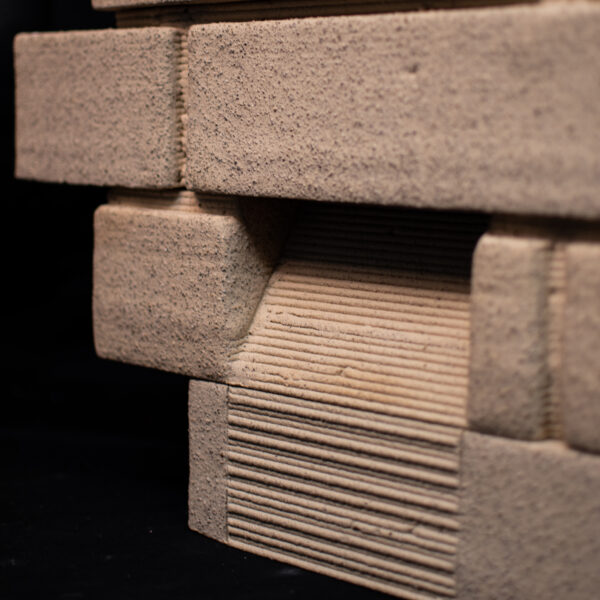
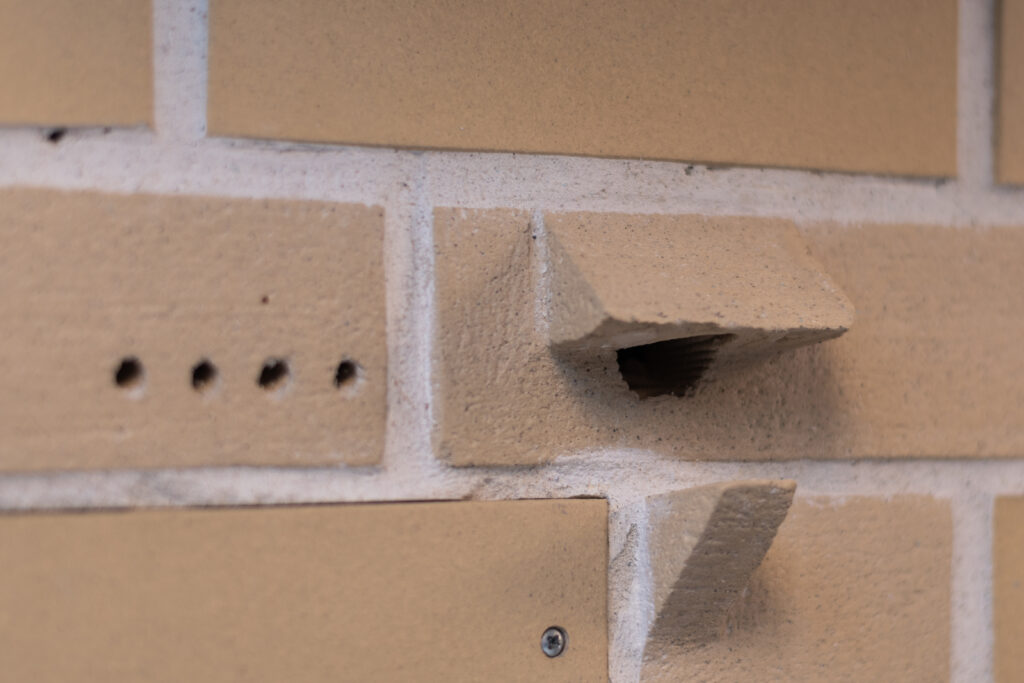
The case study focuses on special ceramic bricks designed to create façade-integrated nesting spaces for threatened species. Traditionally, these elements were produced through labor-intensive manual processes, limiting scalability, repeatability and integration into industrial production chains.
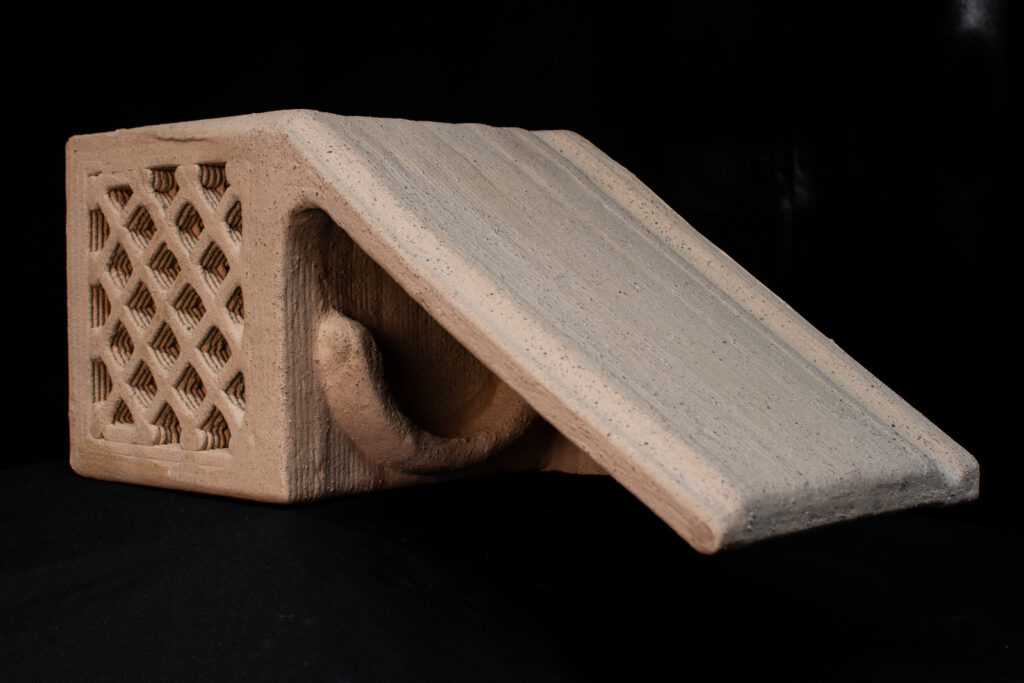
By introducing additive manufacturing, the production logic shifts fundamentally. Geometry, internal cavities and material distribution are digitally defined and can be adjusted parametrically, while the ceramic material is deposited layer by layer. Even at laboratory scale, the new process resulted in a significant reduction of production time, while meeting the functional and material requirements of facade-grade ceramics.
Beyond efficiency, the digital workflow enables greater geometric control, consistent quality and clearer interfaces for facade integration. More importantly, it establishes a transferable process model—linking digital design, ceramic material behavior and industrial facade production—and demonstrates how ceramic 3D printing can move from experimental research toward real-world architectural application.
Ever wondered how the production of 3D-Printed Façade looks like? Check out this 3DP Nesting Bricks Video!
Alex Wolf shows step-by-step, how the hollow bricks he created for his dissertation were made. The final prototype shows three different façade-integrated nesting-units for endangered birds.
 facadeworld