


At the Bucky Lab of TU Delft, students continuously explore façade concepts that respond to real environmental challenges. One of these challenges is the increasing urban heat island effect, which raises temperatures in cities and increases the demand for mechanical cooling. The student project FlowFunnel proposes a façade-integrated passive cooling panel designed to improve indoor comfort while reducing energy consumption.
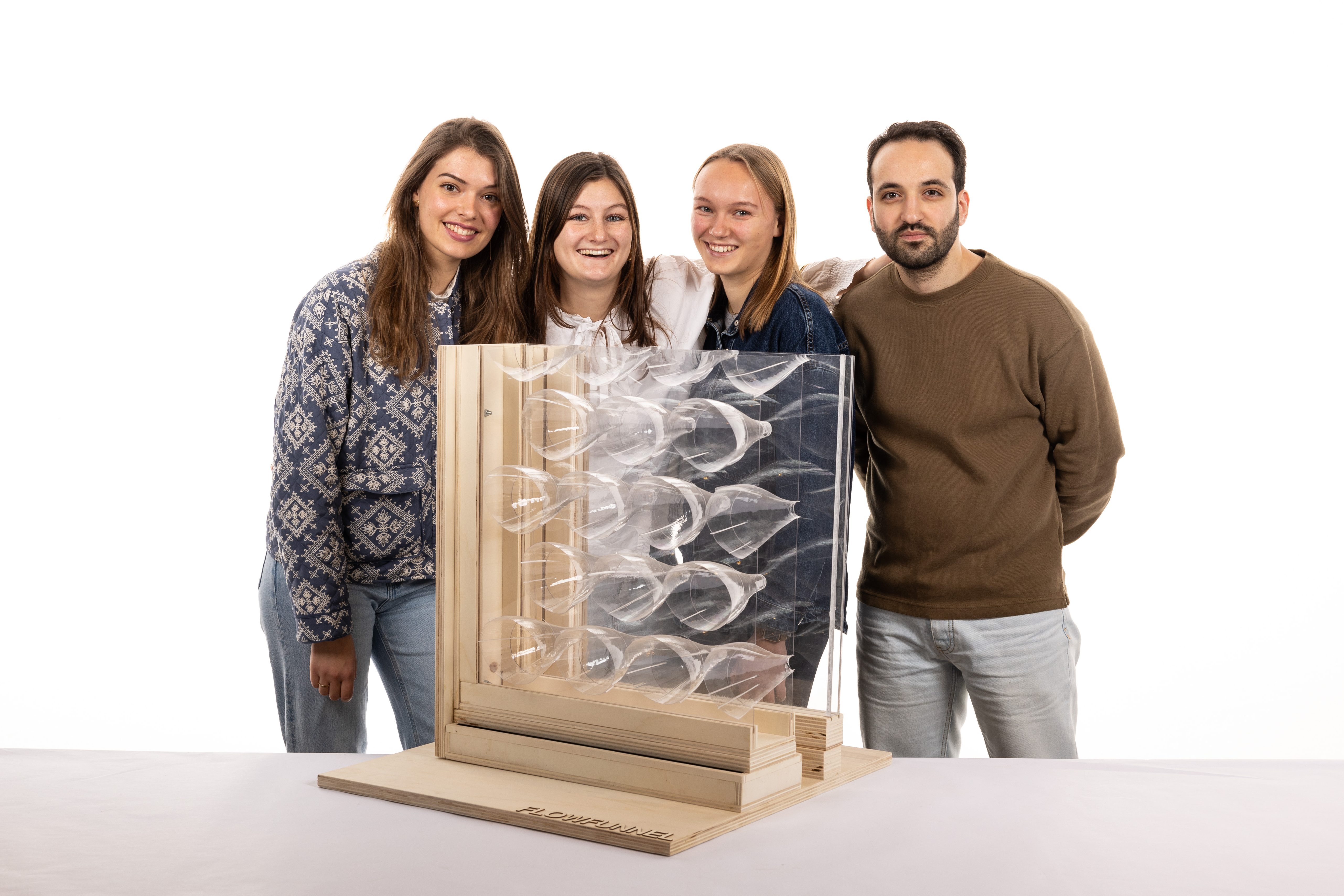
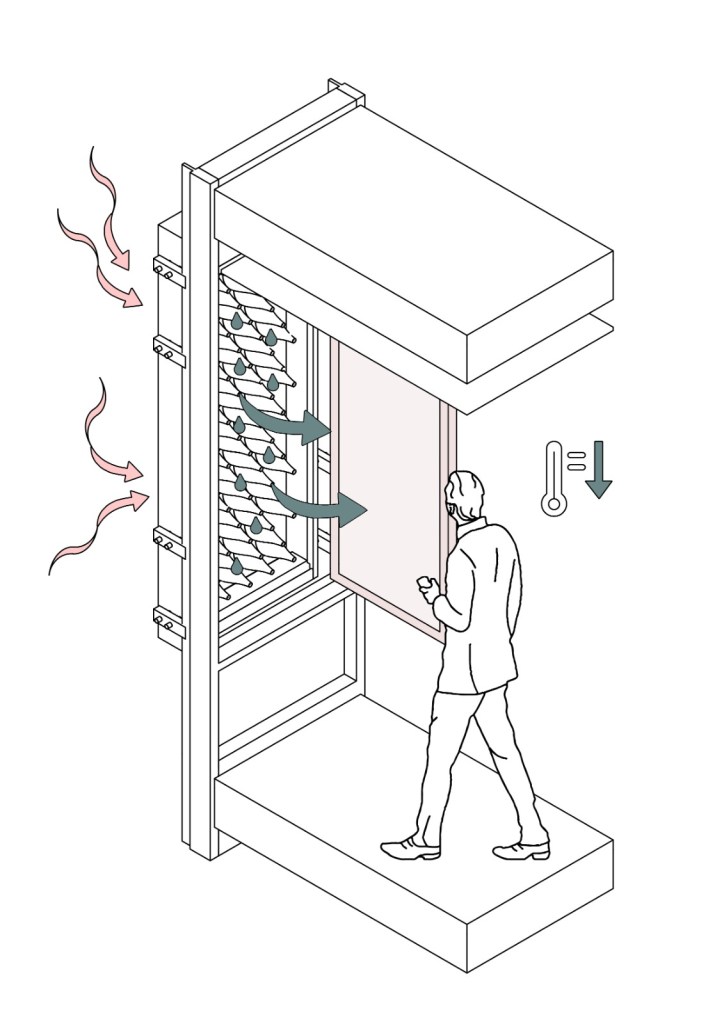
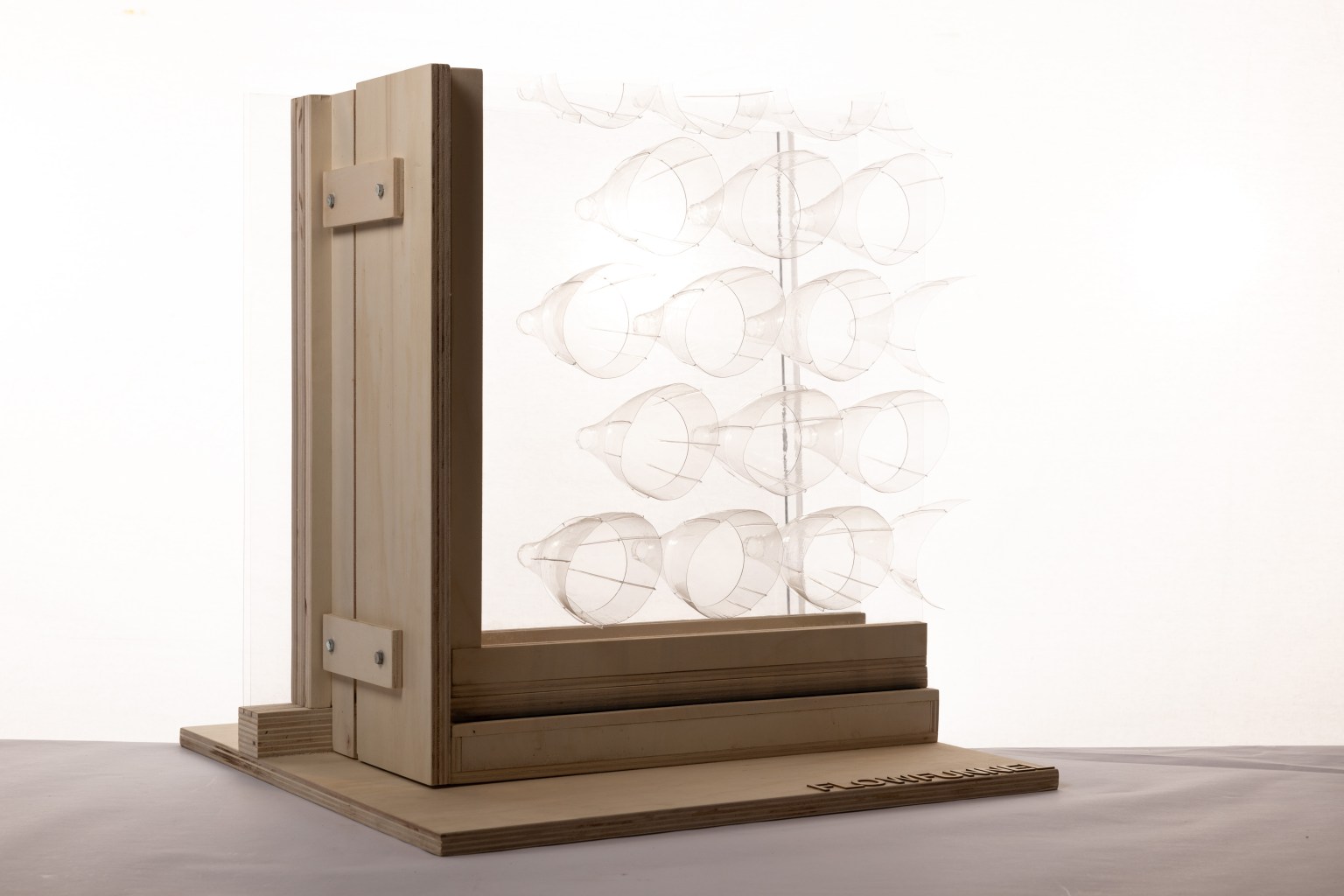
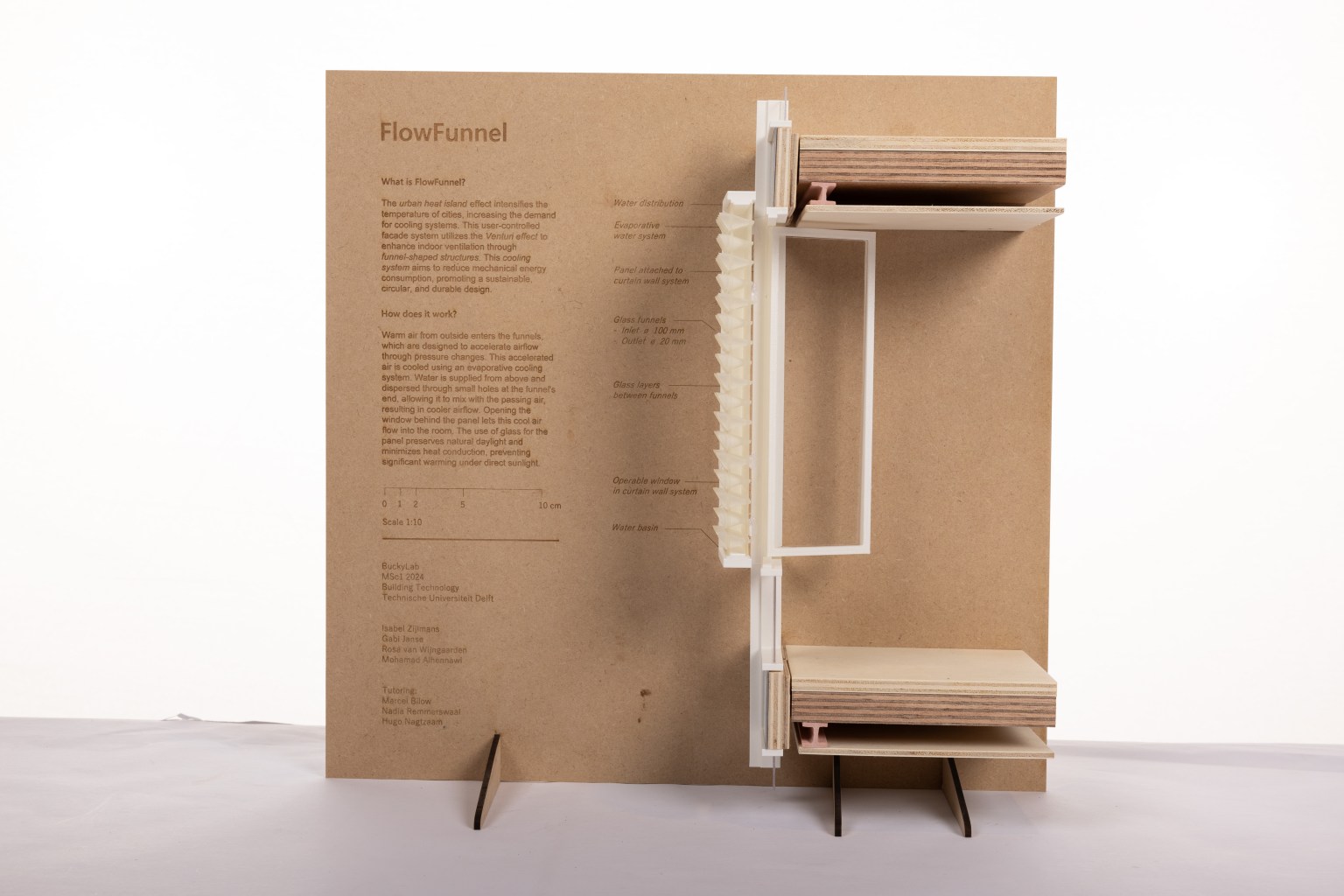
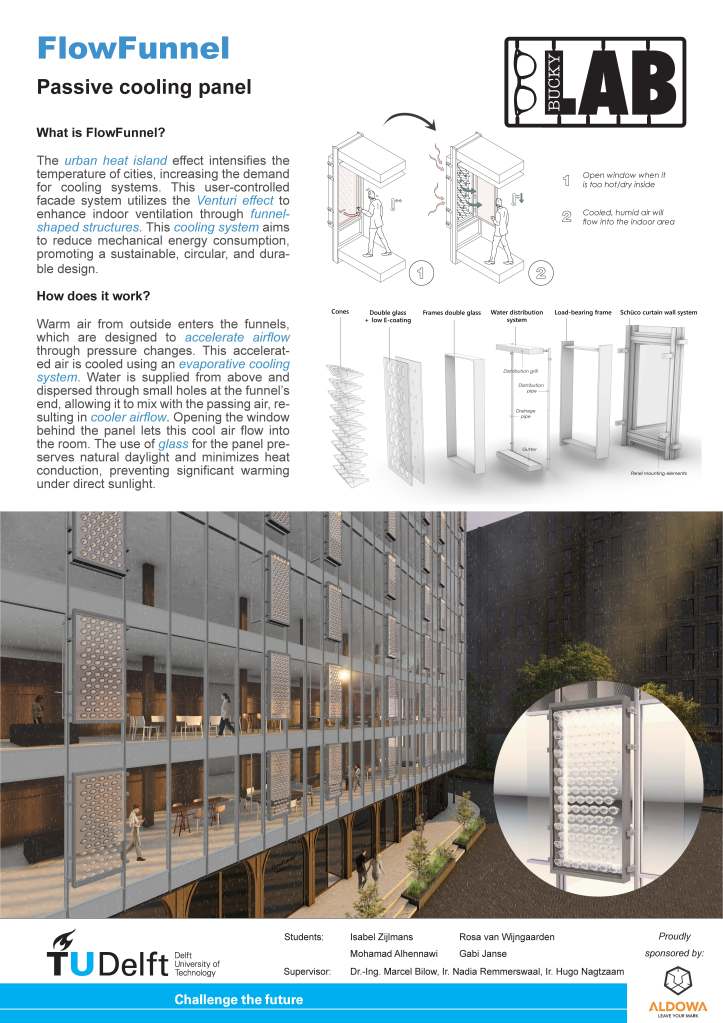
The concept uses the Venturi effect to accelerate airflow through funnel-shaped elements integrated into a façade panel. Warm outside air enters the funnels, where pressure changes increase air velocity. At the top of the system, water is distributed through small openings, creating an evaporative cooling process as the accelerated air passes through the funnels. This process lowers the air temperature before it reaches the interior space.
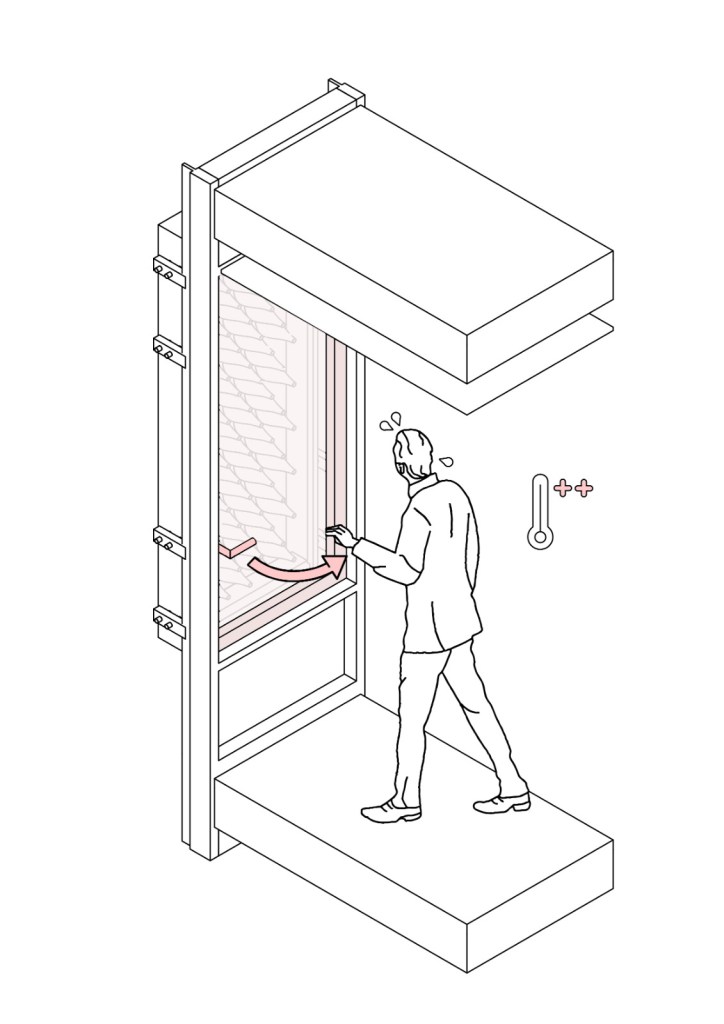
When occupants open the window behind the panel, the cooled and slightly humidified air flows naturally into the room, improving indoor comfort without relying on active mechanical systems. A double-glazed outer layer protects the system while maintaining daylight access and reducing solar heat gain.
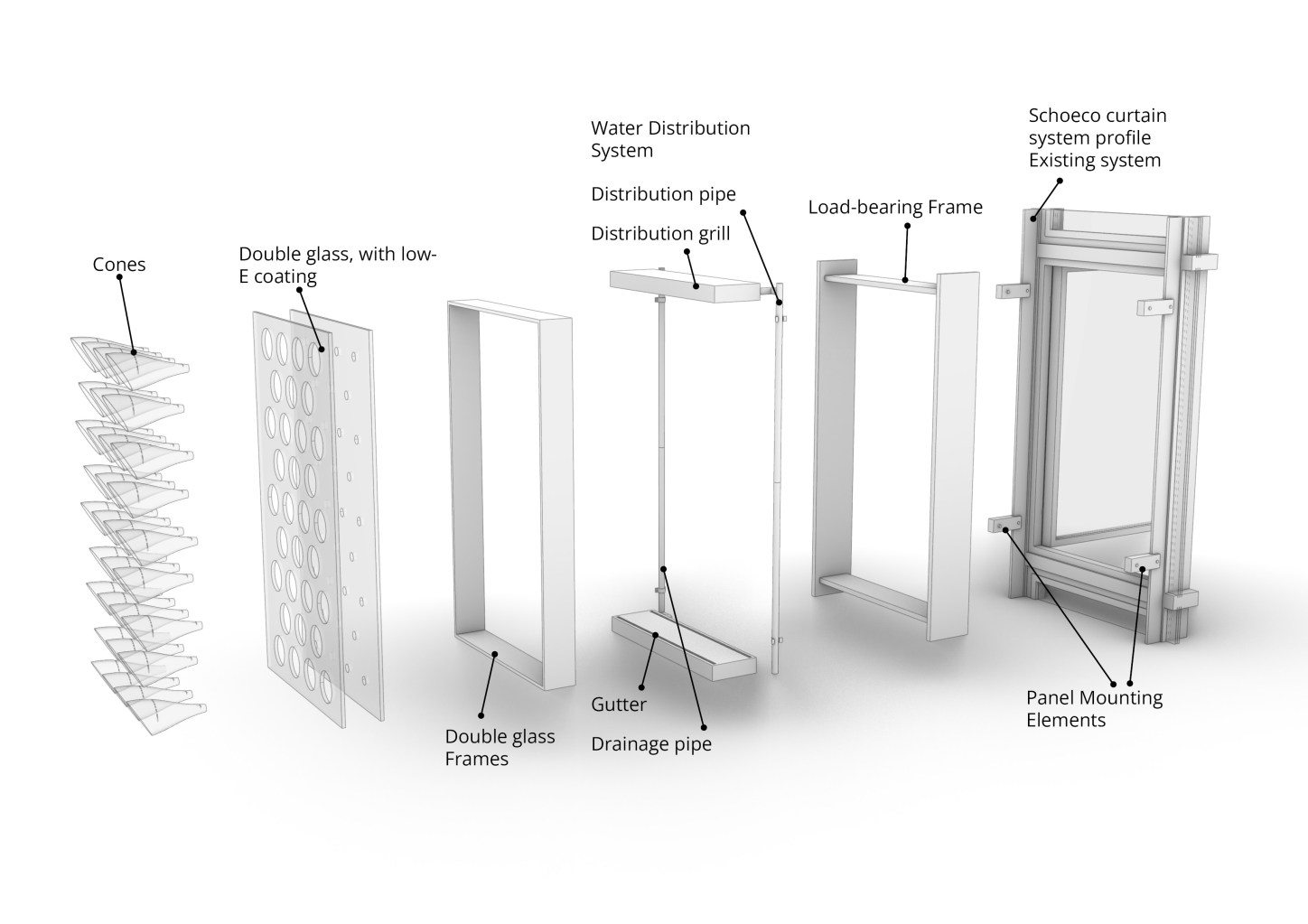
The FlowFunnel system is designed as a modular façade element that can be integrated into curtain wall systems. The assembly includes funnel components, insulated glazing with low-E coating, a water distribution system, and a structural frame compatible with façade systems such as Schüco curtain walls.
The project was developed as part of the Bucky Lab at TU Delft, where students design and prototype innovative façade technologies in collaboration with industry partners.
Students: Isabel Zijlmans, Mohamad Alhennawi, Rosa van Wijngaarden, Gabi Janse
Supervisors: Dr.-Ing. Marcel Bilow, Ir. Nadia Remmerswaal, Ir. Hugo Nagtzaam
Sponsor: Aldowa
Projects like FlowFunnel demonstrate how simple physical principles and façade design can contribute to more sustainable and climate-responsive buildings.
 facadeworld