


An adaptive auxetic façade system responding to changing climate conditions
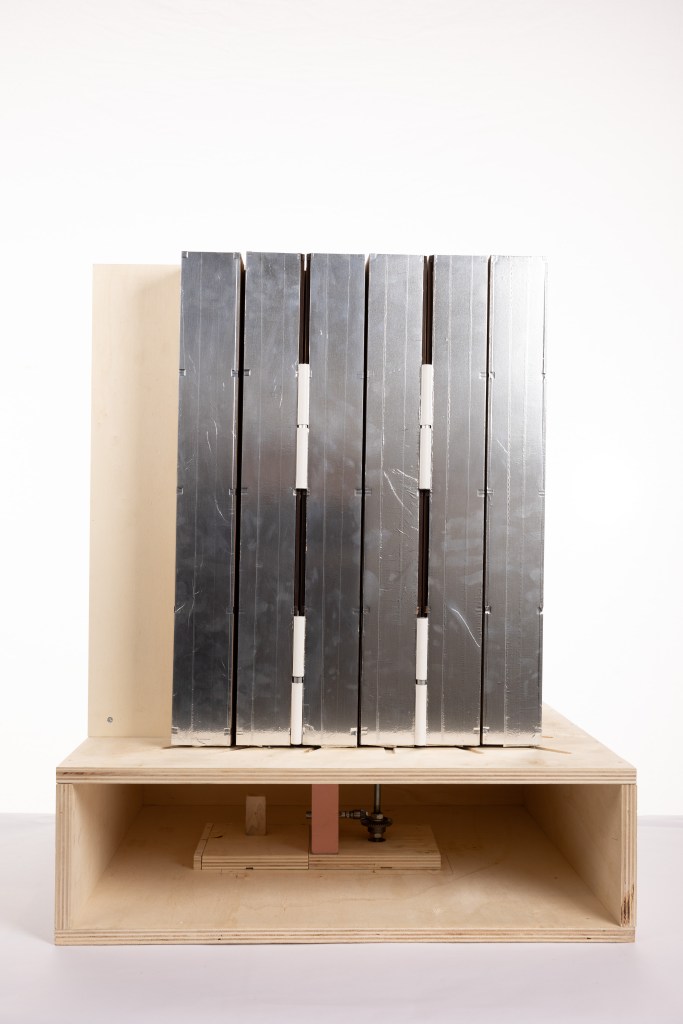
Kinetic Chameleon is a dynamic façade concept developed at the Architectural Engineering + Technology department of TU Delft within the Bucky Lab. The project challenges the notion of static building envelopes in a climate that is constantly changing. Instead of relying on fixed performance values, the system proposes an adaptive façade capable of transforming its physical properties in response to environmental demands.
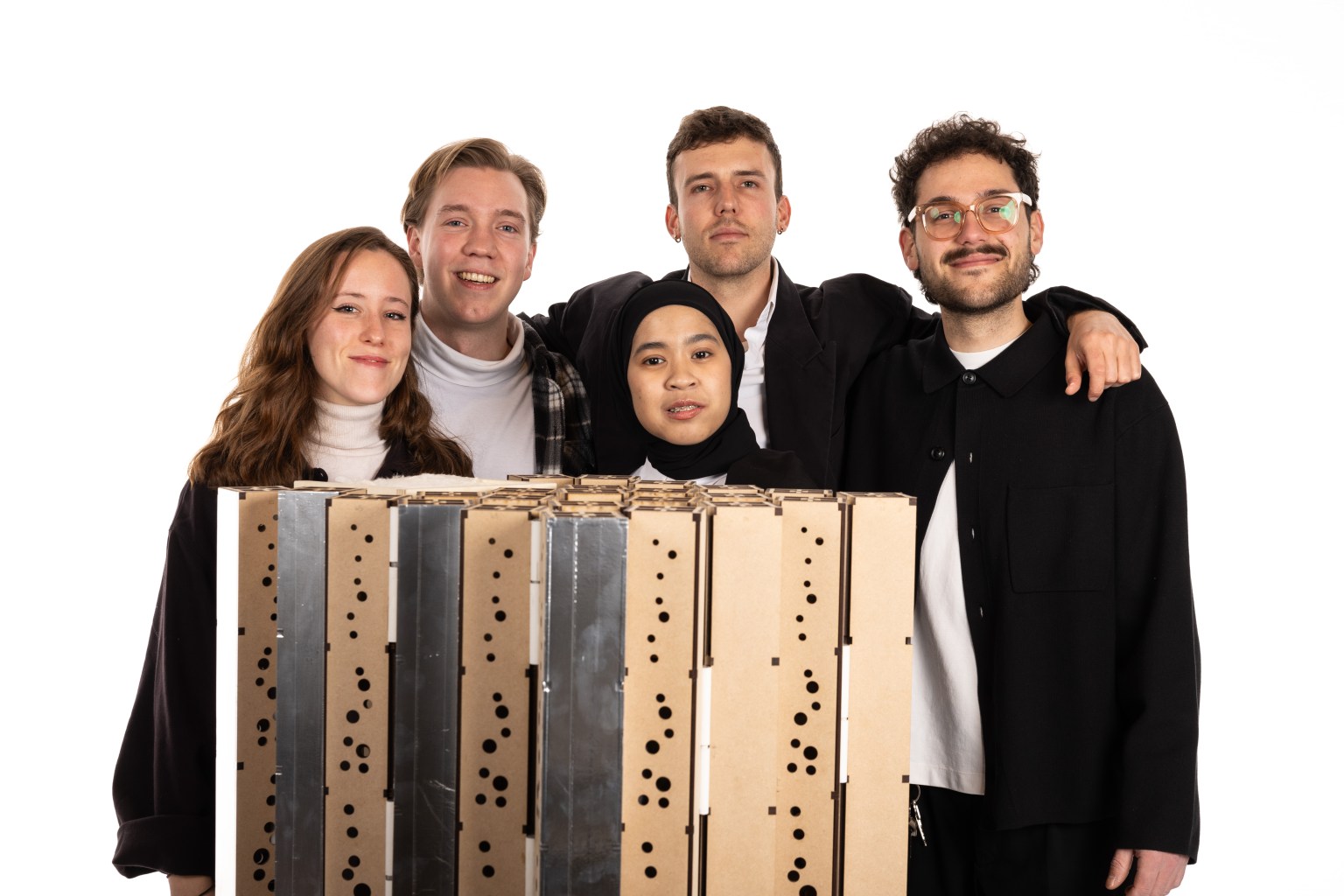
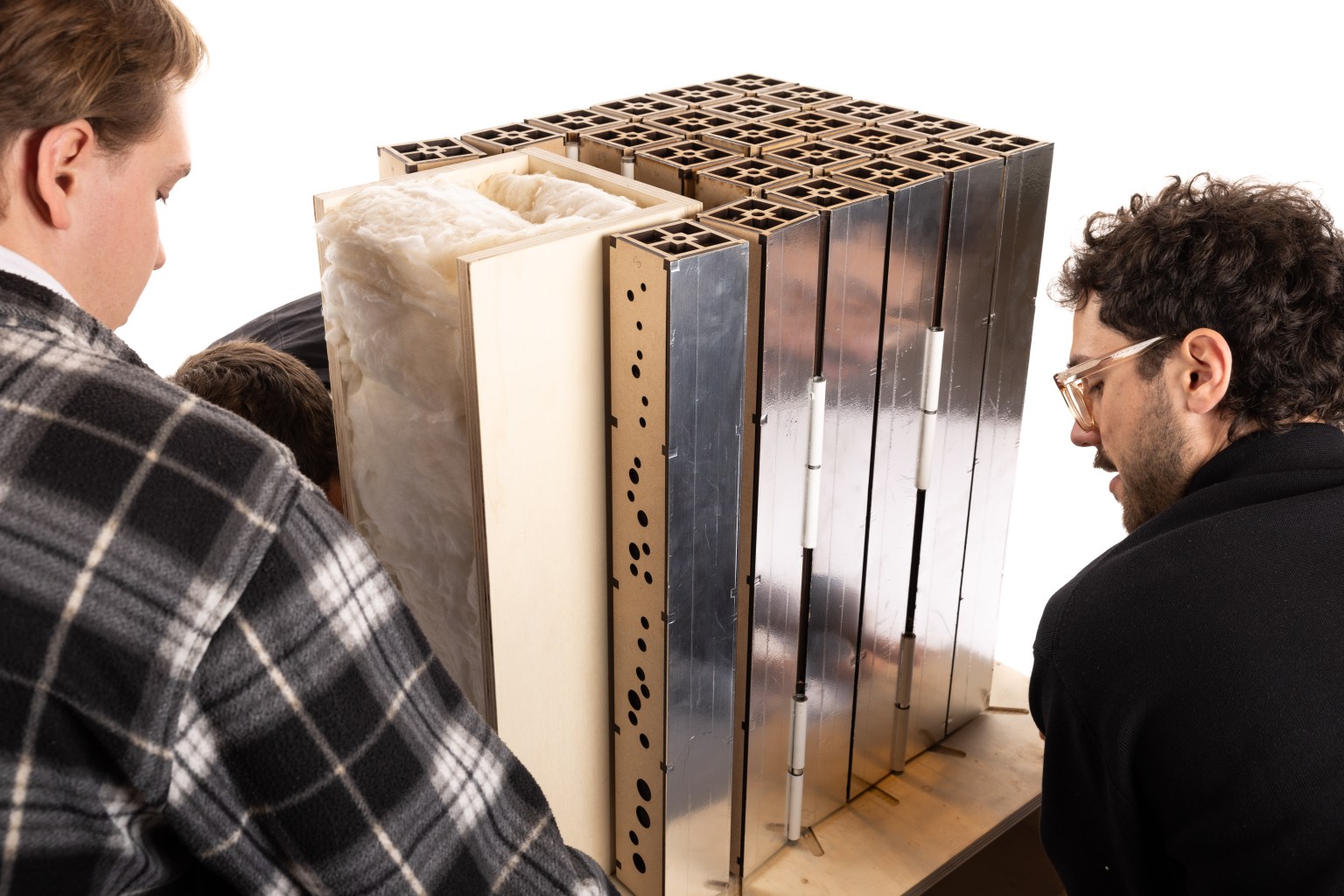
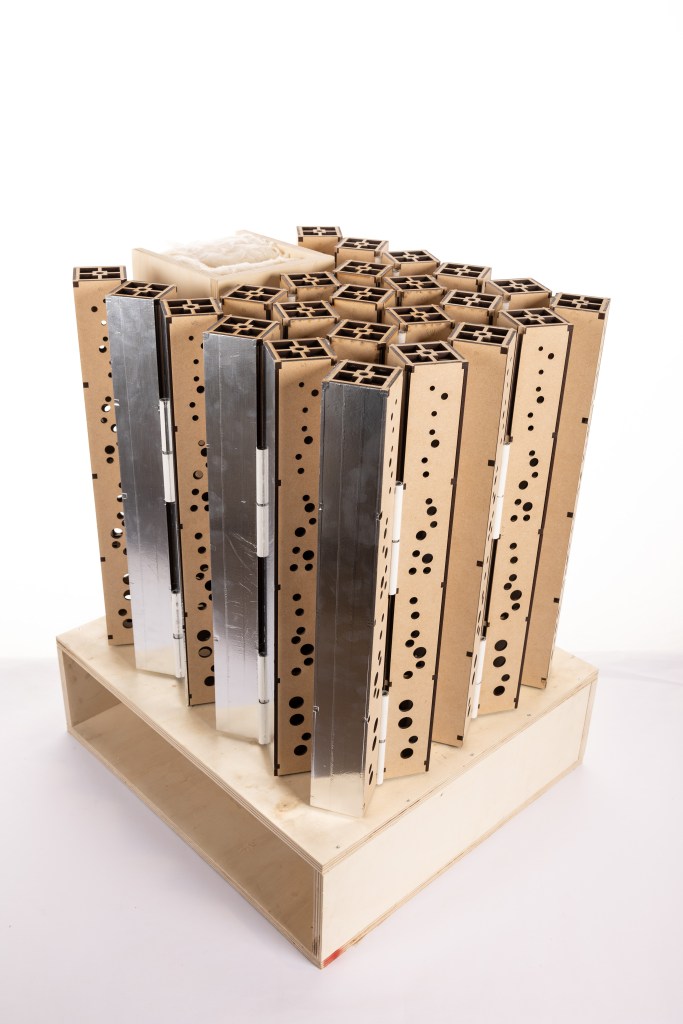
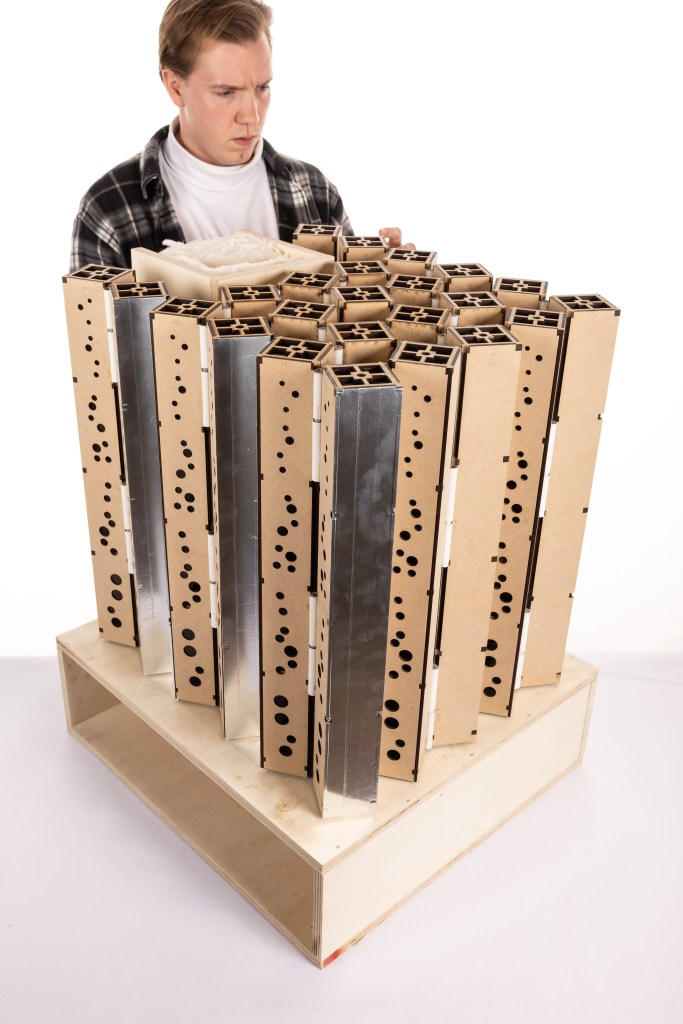
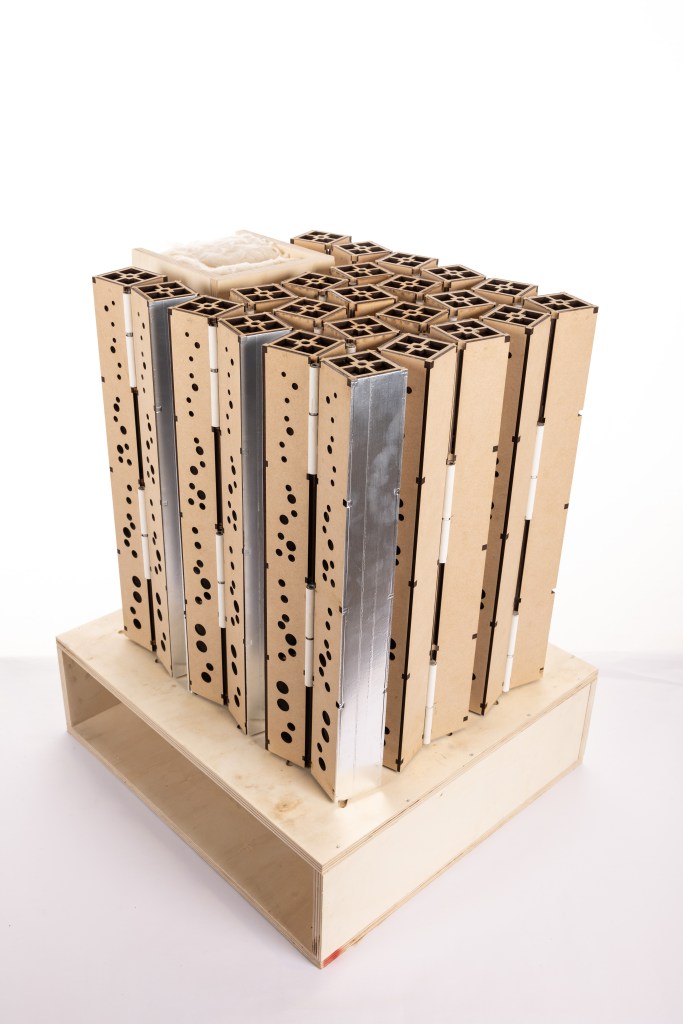
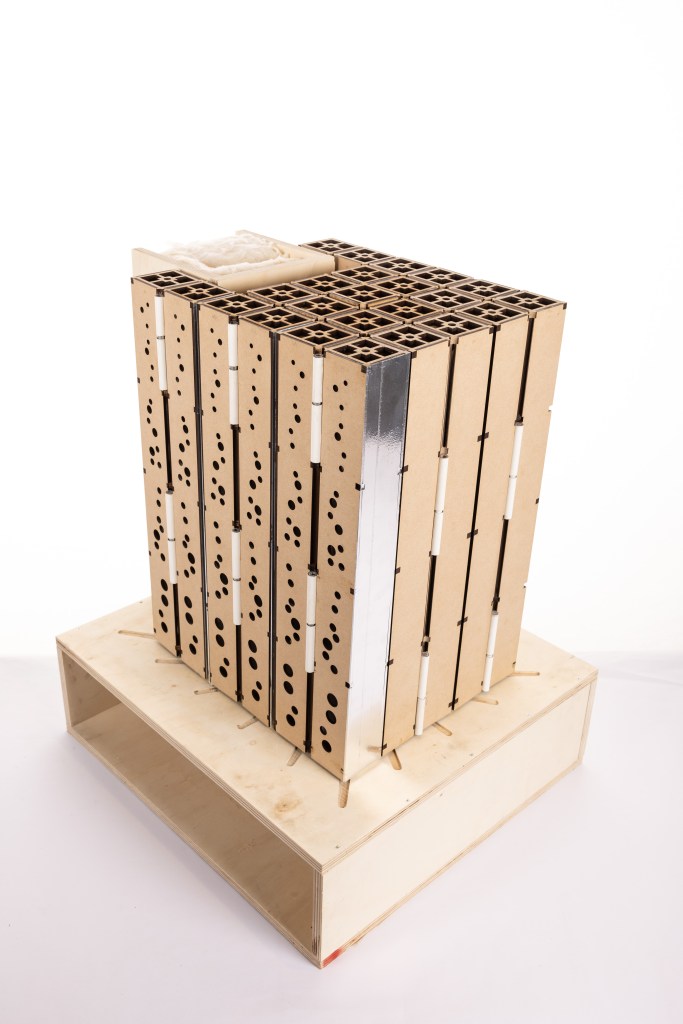
Inspired by the chameleon’s ability to adjust to its surroundings, the students explored how geometric transformation can directly influence permeability, thermal resistance and ventilation capacity. The core of the project is based on an auxetic movement principle. Through controlled geometric expansion and contraction, the façade alters its porosity and density, allowing it to shift between different environmental states.
In its open configuration, the system reaches a ventilation rate of 1500 m³/h, enabling maximum airflow. In an interim state, the ventilation rate is reduced to 1100 m³/h with a U-value of 6.0 W/m²K. When fully closed, the façade achieves a U-value of 0.30 W/m²K, providing high thermal insulation. By transforming its geometry rather than adding mechanical layers, performance becomes embedded in the structure itself.
The project evolved from geometric studies to a series of physical prototypes, culminating in a full-scale demonstrator that tests movement logic, structural behaviour and spatial impact. The result is a façade system that redefines adaptability as a geometric
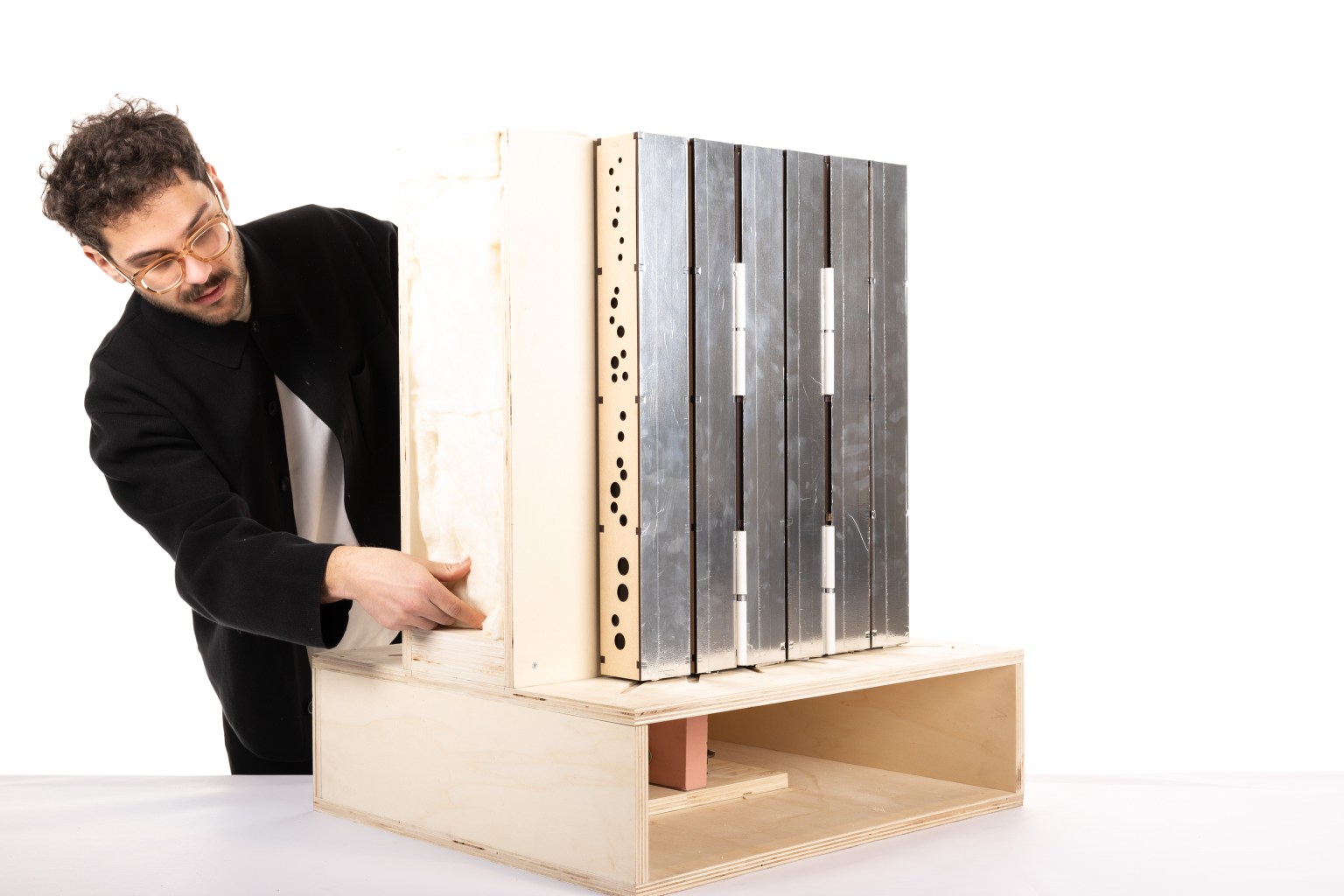
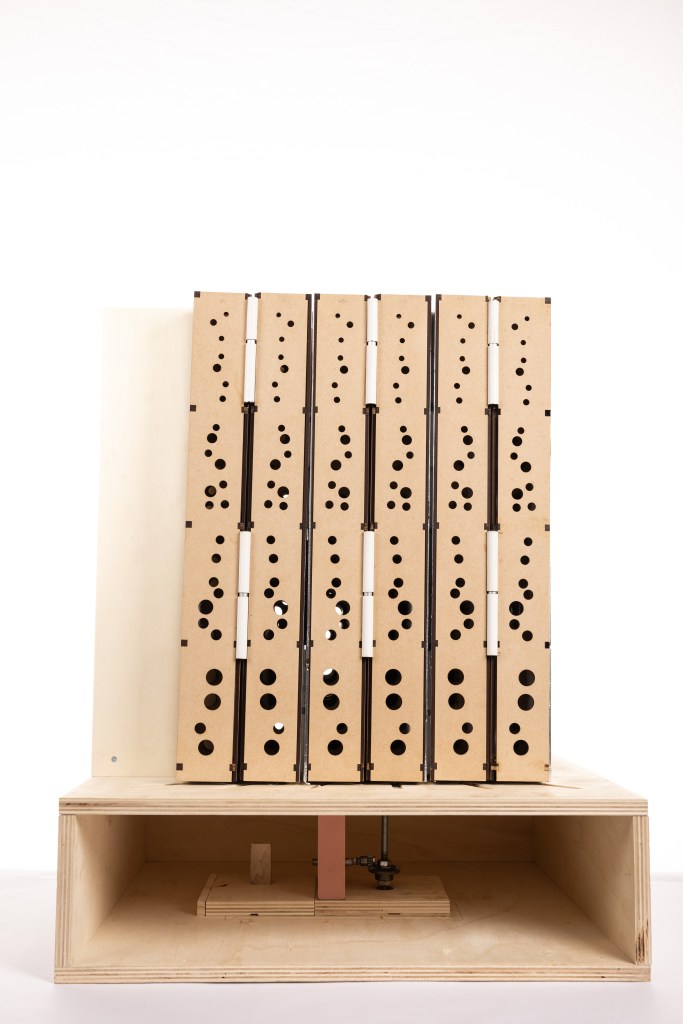
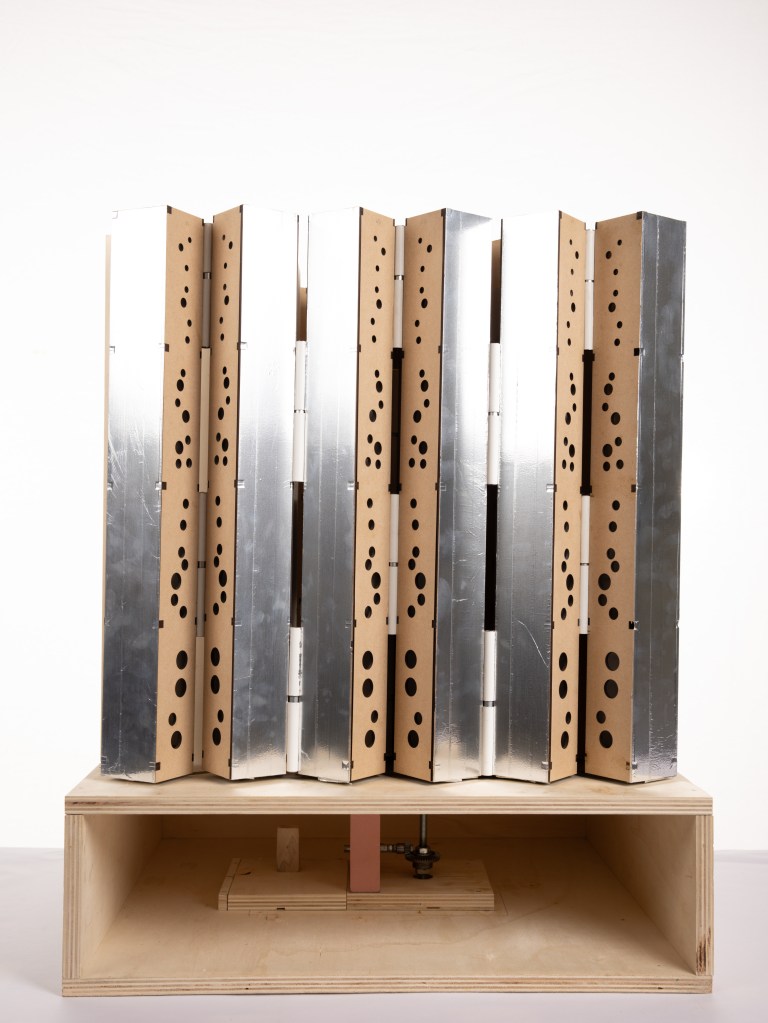
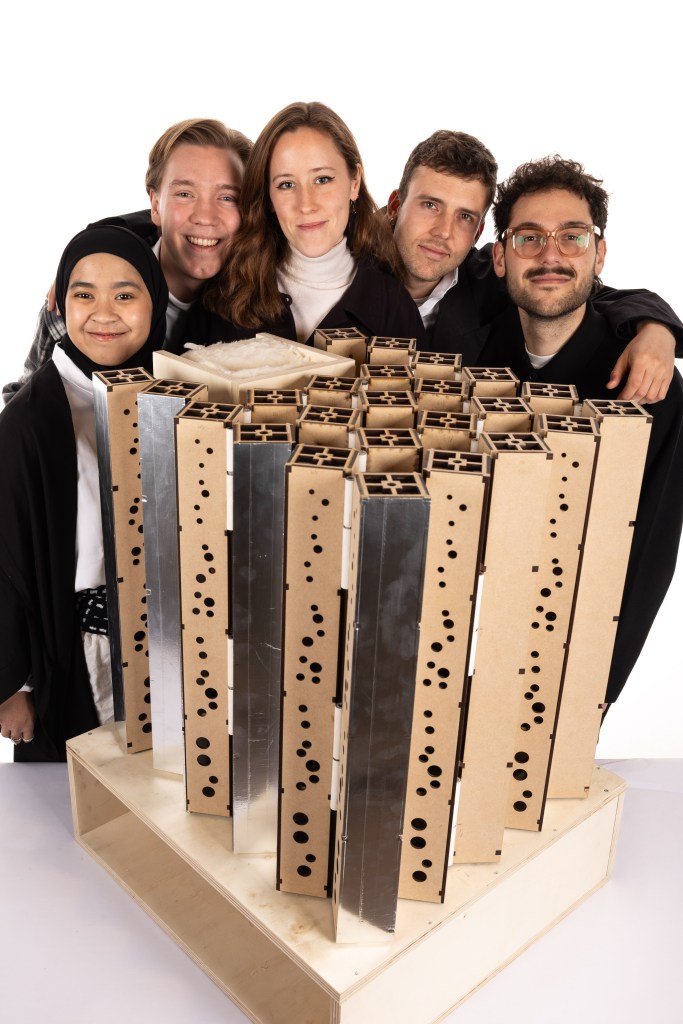
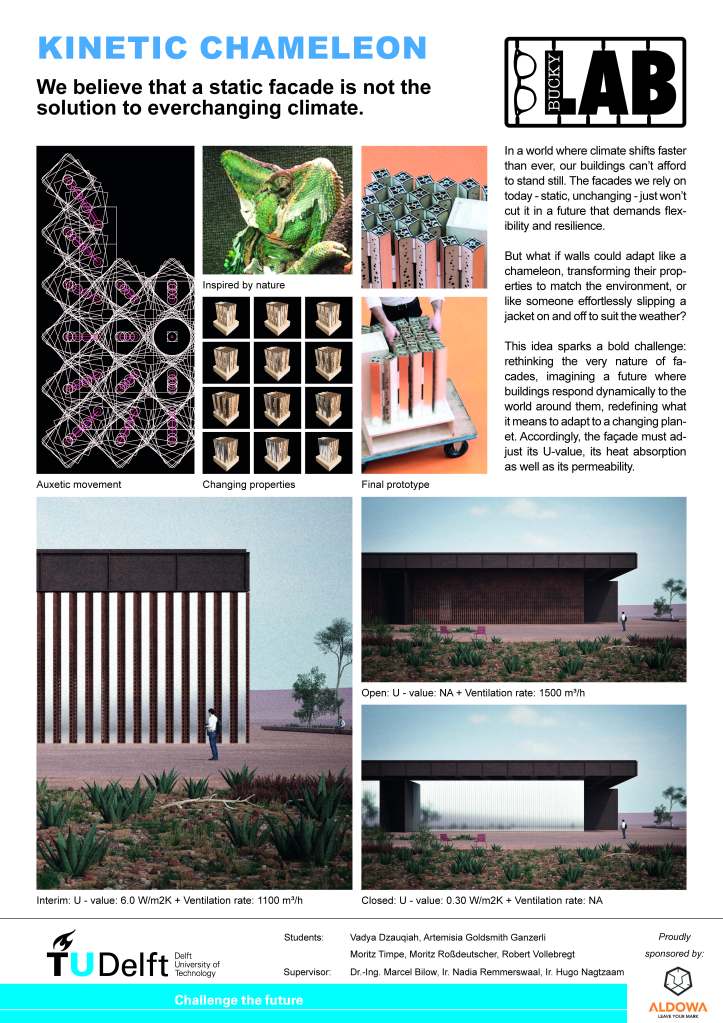
Kinetic Chameleon was developed by Vadya Dzauqiah, Artemisia Goldsmith Ganzerli, Moritz Timpe, Moritz Roßdeutscher and Robert Vollebregt under the supervision of Dr.-Ing. Marcel Bilow, Ir. Nadia Remmerswaal and Ir. Hugo Nagtzaam at TU Delft. The project was proudly sponsored by Aldowa.
 facadeworld