


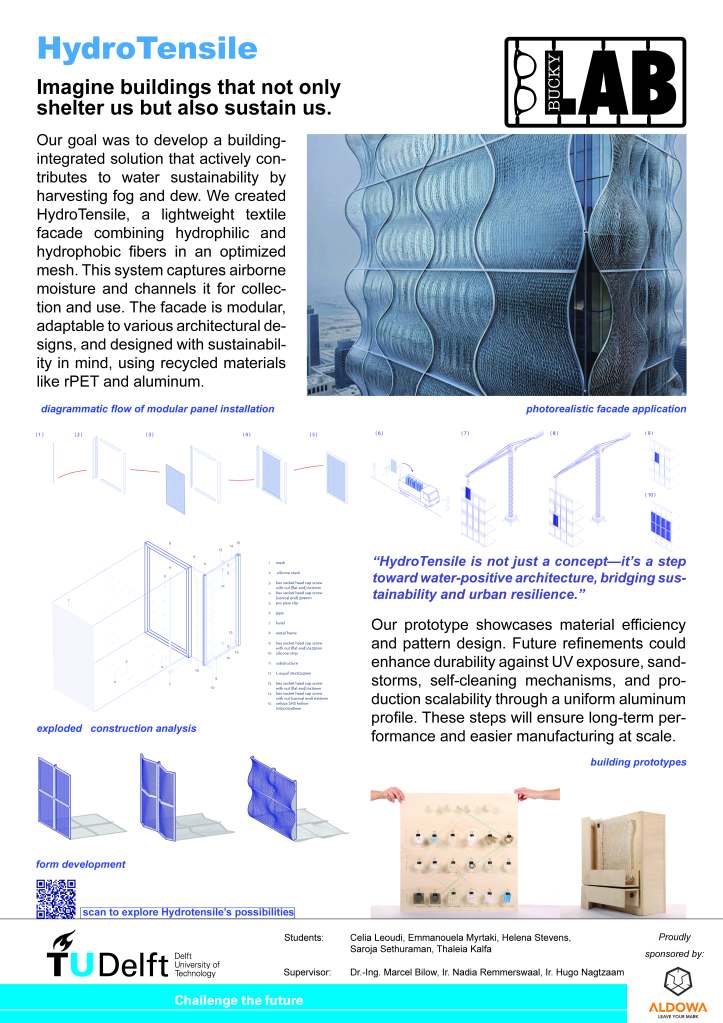
At Bucky Lab, TU Delft, we explore how façades can do more than protect buildings. HydroTensile is one of those explorations — a research-driven project that investigates how a façade can actively contribute to water sustainability by harvesting fog and dew from the air.
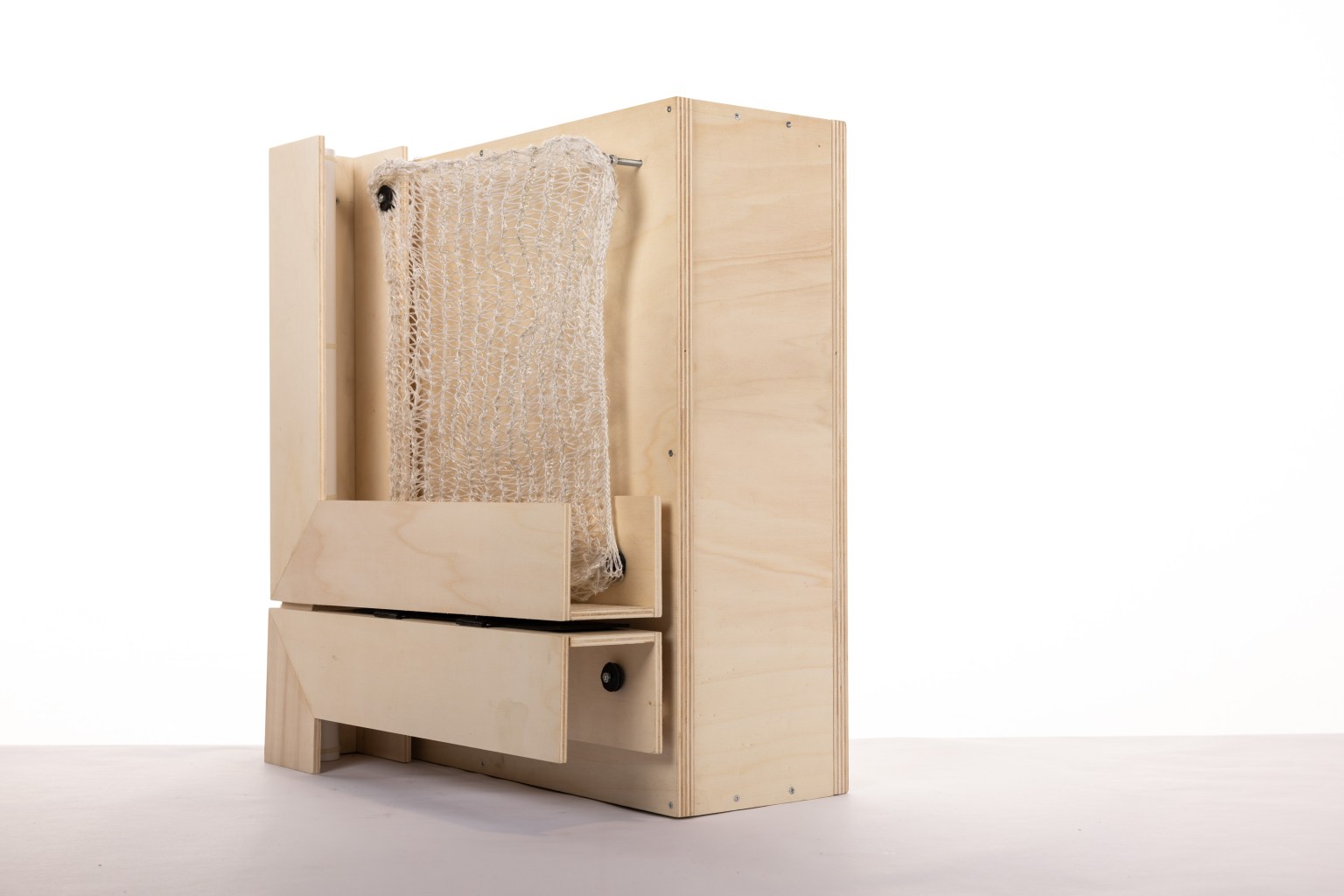
HydroTensile is a lightweight, building-integrated textile façade system. An optimized mesh combines hydrophilic and hydrophobic fibers, allowing airborne moisture to be captured, guided, and collected. Rather than keeping water out, the façade works with climate conditions and treats water as a resource.
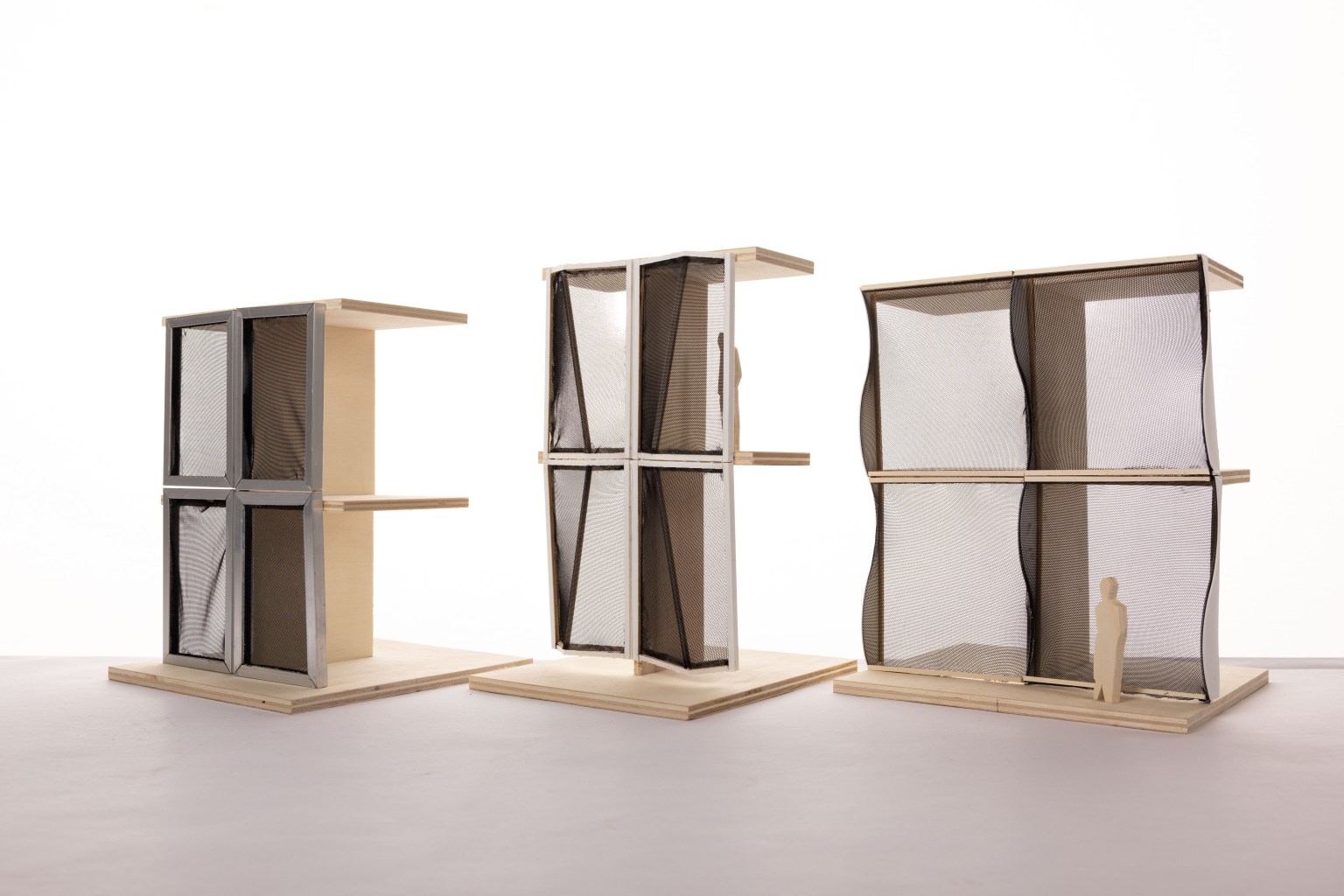
The system is developed as a modular panel façade, adaptable to different architectural contexts and designed with scalability in mind. Material choices support this ambition, combining recycled PET (rPET) textiles with aluminum components to balance lightness, durability, and circular thinking.
Physical prototypes play a central role in the project. They test material behavior, pattern development, construction logic, and installation sequencing. Future refinements could improve durability against UV exposure and sandstorms, introduce self-cleaning mechanisms, and further optimize production for large-scale application.
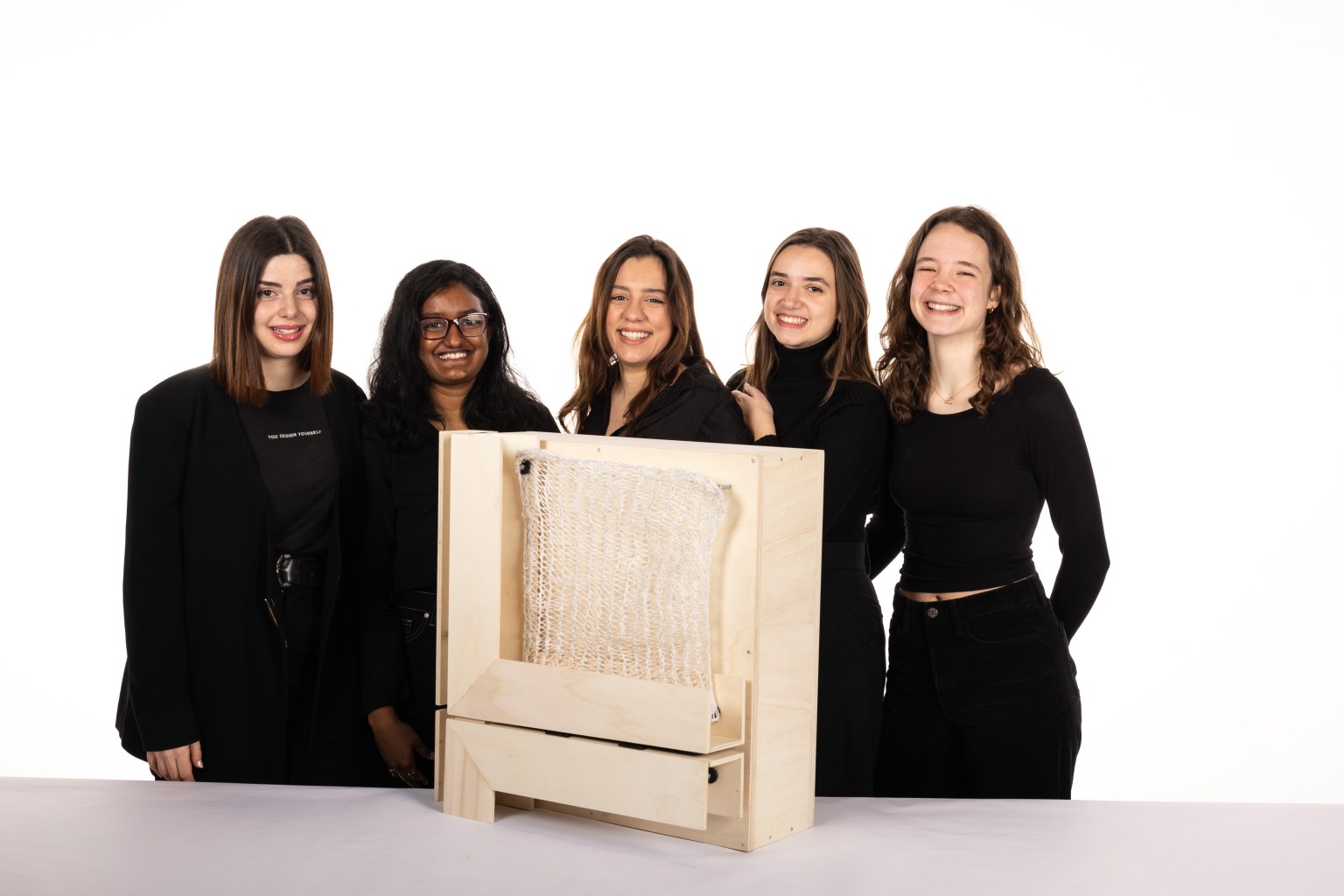
HydroTensile was developed by the student team Celia Leoudi, Emmanouela Myrtaki, Helena Stevens, Saroja Sethuraman, and Thaleia Kalfa at Bucky Lab, TU Delft, under the supervision of Dr.-Ing. Marcel Bilow, Ir. Nadia Remmerswaal, and Ir. Hugo Nagtezaam.
The project was proudly sponsored by ALDOWA.
HydroTensile is not a finished product, but a step toward water-positive architecture — and a reminder that façades can quietly become part of the environmental systems they face.
 facadeworld