


///Bosco Verticale in Milan – Ambition and Complexity on the Façade
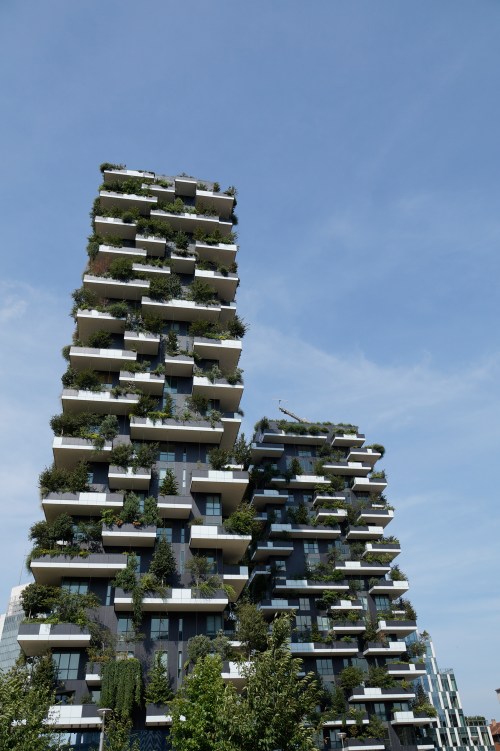
The Bosco Verticale in Milan, designed by Stefano Boeri Architetti in 2014, has become a global symbol of green architecture. Its façades, densely planted with trees and shrubs, promise a new way of bringing nature back into the city. Yet behind the poetic image of a “vertical forest” lies a highly complex and resource-intensive structure.
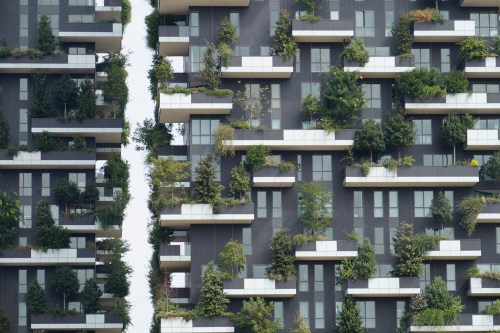
Unlike a traditional façade, Bosco Verticale’s exterior is essentially a system of oversized balconies, each reinforced to carry the weight of soil, planters, and mature trees. This structural effort is immense: concrete cantilevers, steel supports, and sophisticated anchoring systems were necessary to turn the façade into a vertical landscape. An automated irrigation and drainage network is embedded within the façade to sustain thousands of plants year-round, and a dedicated team of arborists is required for ongoing maintenance.
The result is undeniably striking. The green façades create a microclimate that shades apartments, absorbs dust, and softens the city’s noise. At the same time, the project raises important questions about sustainability. To achieve the appearance of effortless greenery, a significant amount of technical infrastructure and material was required. Bosco Verticale therefore embodies a paradox: it is both a pioneering ecological statement and a highly engineered piece of architecture that depends on constant care.
As a façade, it redefines what is possible—merging architecture, landscape, and engineering into one vertical ecosystem. But it also reminds us that “green” design in high-rise construction is rarely simple, and often comes with hidden structural and ecological costs.
 facadeworld